
About Abutia
Discover the story, culture, and tradition behind our town.
History of the People of Abutia
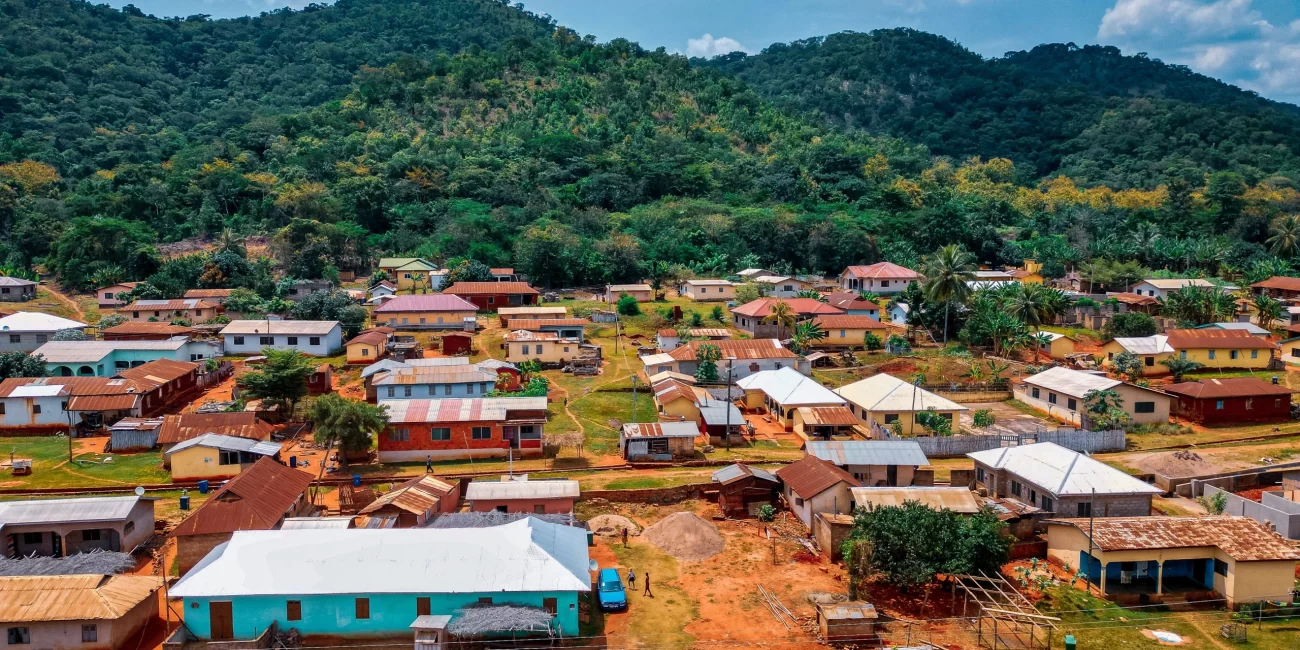
The Abutia Traditional Area is an Ewe-speaking community located approximately three (3) minutes’ drive west of Sokodé, within the Volta Region of Ghana. It lies between latitudes 6°33′N and 6°93′N and longitudes 0°17′E and 0°53′E, covering a total land area of about 604 square kilometres.
The people of Abutia trace their ancestry to the great Ewe migrations that took place between the 12th and 14th centuries AD. During this period, Ewe-speaking groups are believed to have journeyed from Abyssinia (present-day Ethiopia), passing through Ile-Ife in Nigeria and Abomey in Benin, before finally settling in the famous walled city of Notsie—known as Glime—in present-day Togo. This migration was largely driven by the need to escape persistent wars and devastating slave raids that threatened their survival.
While in Glime, the ancestors of Abutia earned distinguished reputations and were collectively referred to as “Yorveawo”, meaning “people unwilling to go into the grave,” and “Adanuawo,” meaning advisers or people endowed with wisdom. These titles reflected their longevity, depth of experience, and exceptional wisdom. As elders who lived long and observed much, they became trusted counsellors within the Notsie Kingdom.
The Yorveawo played a vital role in the administration of the kingdom. They served as special advisers to King Agorkoli and the wider state, offering guidance in times of conflict, dispute resolution, and other crucial matters of governance. Beyond this, they were revered as custodians of the customs, traditions, and practices of the Notsie Kingdom—guardians of cultural continuity and moral order.
This proud heritage of wisdom, resilience, and leadership continues to shape the identity and traditions of the people of Abutia to this day.
Migration from Notsie
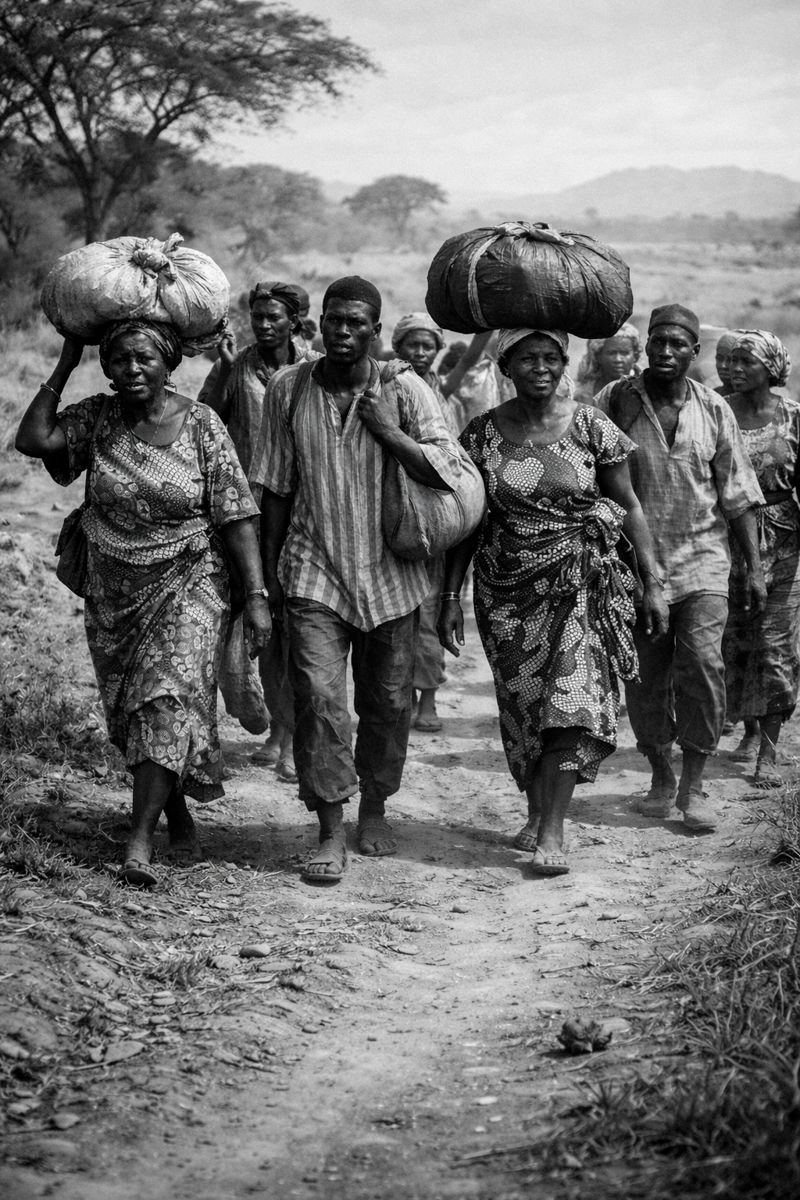
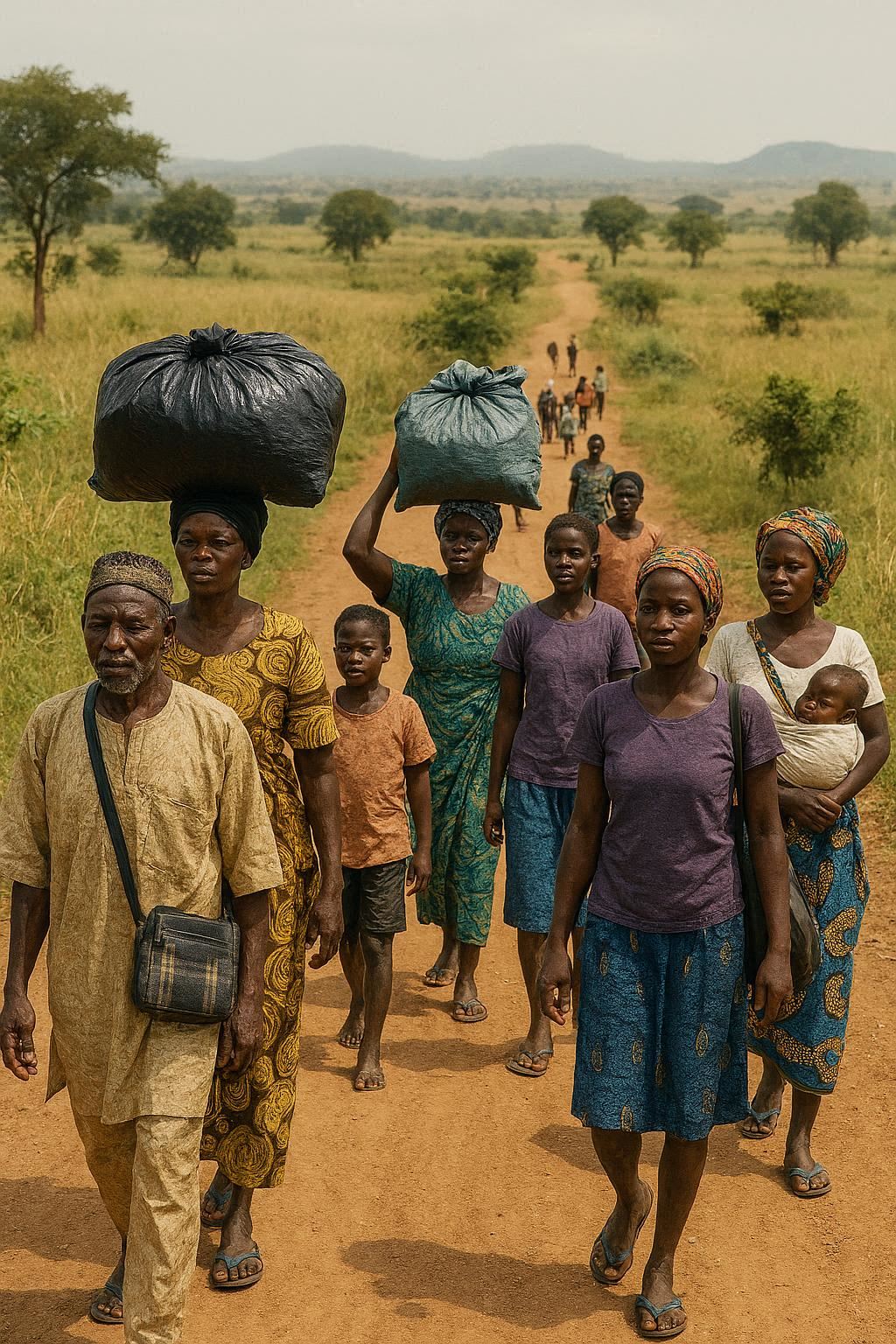
Comparatively, the Yorveawo enjoyed a freer and more peaceful life than many of their compatriots under the rule of King Agorkoli. They believed that this relative favour was the result of the protection and guidance of their gods, whom they deeply revered. However, when the wider Ewe population resolved to leave Notsie in response to the tyranny of King Agorkoli, the Yorveawo also joined the migration. Though they were less directly affected, they could not betray the collective trust of their people, as the decision to depart was taken communally and sealed by oath.
During the exodus from Notsie, the Yorveawo travelled together with the Gbekorwo (now known as the Adaklus), taking the central route. The Anlo people moved southwards, while the Gbis and the Akpinis migrated towards the north.
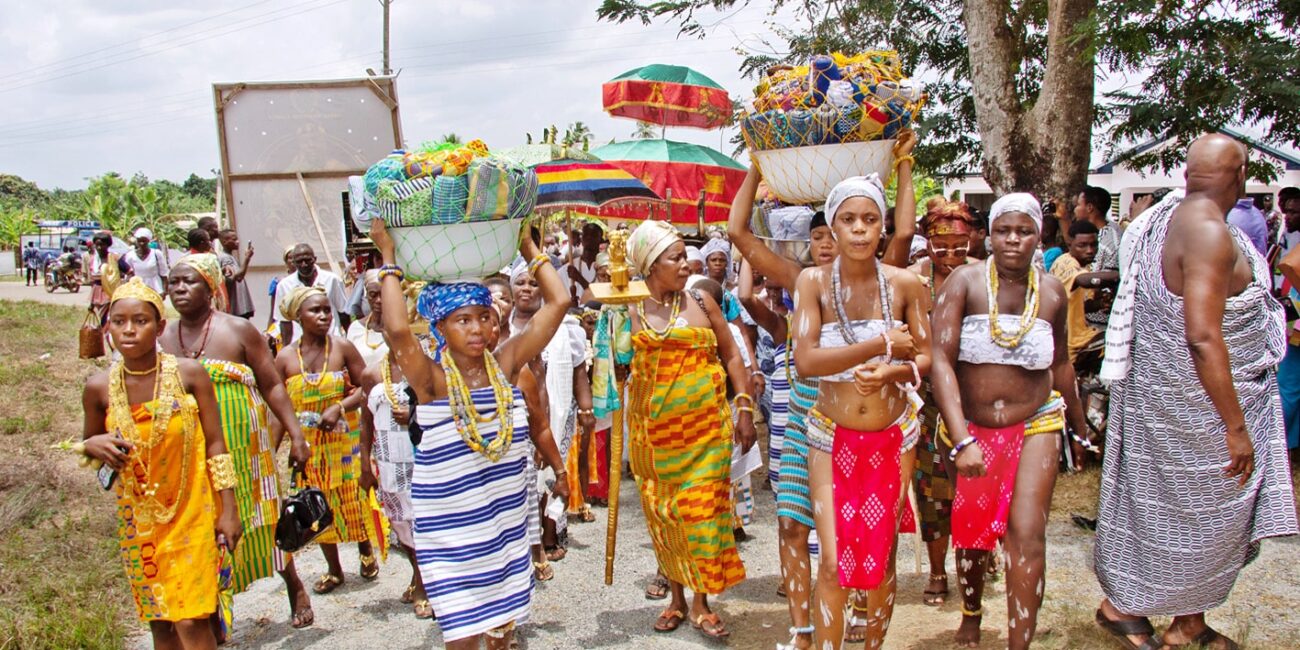
Strengthened by their faith in their gods, the foresight of their priests, the extraordinary skill and bravery of their warriors, and the exceptional healing powers of their herbalists, the Yorveawo were well equipped to overcome the many obstacles they encountered along the way. As a result, their primary concern was not the speed of their movement, but rather the direction they should take to find a suitable and enduring place of settlement.
RELIGIOUS PRACTICES IN ABUTIA
The people of Abutia have practised traditional religion since their days in Notsie, and this belief system shaped the early spiritual landscape of the area. In Teti, the first sacred monuments that welcomed visitors were shrines dedicated to Dente, the chief god of security, and Dzotame, the horn-headed god of war and defence. Dzotame was believed to protect the town during conflicts, while both deities were revered as guardians who safeguarded the community from enemies, diseases, evil spirits, and misfortune, and who also ensured prosperity and fertility among humans and animals.
Behind the shrine of Dente stood the shrine of Gadzamawu, the rain god, who was brought from Gadza in present-day Togo during a severe drought in Abutia, around the time the Yorveawo migrated from Agbenutodzi. The introduction of Gadzamawu was considered crucial for restoring rainfall and sustaining agriculture, reinforcing the central role of the gods in the survival and well-being of the community.
The worship of these and other deities was deeply rooted in Abutia’s history and was linked to the protection and privileges the people believed they enjoyed in Notsie through divine intervention. These beliefs fostered strong discipline, moral order, and respect for traditional authority, upheld through taboos and customs. Chiefs, priests, and custodians of the gods were highly respected, and powerful fetishes such as Atando gained prominence for their reputed ability to bring success, fertility, protection, healing, and long life, firmly embedding traditional religion into the social, cultural, and moral fabric of Abutia.
Christianity was introduced to Abutia in 1888 through Abutia Kloe and spread gradually across the traditional area, largely through the efforts of the North German Mission Society, popularly known as the Bremen Mission. This mission, which had earlier established stations across Eweland in Ghana and Togo from the mid-19th century, played a central role in founding the Evangelical Presbyterian (E.P.) Church. Missionaries frequently passed through nearby Tsito during their travels, laying the groundwork for evangelism in Abutia. In the early 1870s, a Ga-speaking merchant and evangelist, Hesse of Tsito Awudome, began preaching in Abutia Kloe, leading to the conversion of a group of young men who later became the pioneers of the E.P. Church in Abutia.
These pioneers—Elias Kodzo Amoa (leader), Moses Diaba, Daniel Sika, Solomon Komla, Joseph Kosi Boateng, and Gideon Kwasi—regularly trekked to Tsito Awudome for catechumen instruction due to the absence of a resident teacher in Abutia. They were baptized and confirmed in 1889 and formally established the Church in Abutia Kloe in 1890, with Elias Kodzo Amoa becoming the first Presbyter (Hamemega). The Church received strong support from traditional authorities, notably Togbe Benyakoe of Gangba and Togbe Adza Kodzo of Gblevi, who provided land, a temporary place of worship, and space for schooling. That same year, the first permanent chapel and school were built at the Old Mission Station (Bu Todome).
From Abutia Kloe, Christianity expanded to Agove and Teti. In 1900, prominent individuals from Agove, including Togbe Adza Dra VI and other notable figures, were baptized and became regular worshippers in Kloe. Further expansion occurred in 1912 when trained catechumens returned to Teti to establish an E.P. Church congregation there. Today, although the Evangelical Presbyterian Church remains the dominant denomination in Abutia, the area now hosts several other Christian churches, reflecting a rich and diverse Christian heritage that has developed over more than a century.
The introduction of formal education in Abutia was closely linked to the activities of the Evangelical Presbyterian (E. P.) Church. With the establishment of the Bremen Mission Church at Abutia Kloe in 1890, formal schooling was introduced the same year through the founding of the Ewe Infant Presbyterian School. The first teachers at Kloe were Moses Amoah and Stephen Doh, who laid the foundation for structured education in the area.
In 1912, the expansion of education reached Teti when Alfred Komla Odum, Jonathan Anani, Noah Adzado, Helmut Monu, and Daniel Adzaku—who had earlier received catechumen instruction at Kloe—returned to establish a school there under the auspices of the E. P. Church. To strengthen and formalise the initiative, the Bremen Mission later sent Mr. Winfred Agbetornyo from Ho to take charge of the school that had been started by the local community.
From these modest beginnings, formal education gradually spread throughout the Abutia communities. Over time, it produced men and women who not only transformed their local communities through leadership and service but also contributed meaningfully to national development.
Abutia Early Settlement
Upon crossing into the territory of present-day Ghana, the Yorveawo were led by one of their most renowned leaders and hunters, Togbe Agbeme. Under his guidance, they settled on the sheltered highlands of Agbenutodzi, an area that lies within what is now the Kalakpa Resource Reserve. The Yorveawo chose Agbenutodzi as their first permanent settlement because of its natural elevation, which provided security against possible attacks from hostile groups.
In time, however, life on Agbenutodzi proved increasingly difficult. Water was scarce on the hilltop, and farming became a constant struggle. Crops began to fail, livestock died frequently, and the harsh climatic conditions compounded their suffering. To make matters worse, the area was plagued by frequent attacks from wild animals such as leopards, lions, and hyenas, making daily life both dangerous and exhausting.
Survival required the Yorveawo to descend regularly into the valley below in search of water and foodstuffs. This task fell largely on the women, who soon became the most vocal in expressing their frustration. They lamented that “abua di di ti ame,” meaning “we are tired” or “we are fed up with descending the hill.” From this seemingly simple expression emerged the name by which the Yorveawo are known today—Abutia. As hardships mounted and tensions grew, the elders of the Yorveawo accepted that Agbenutodzi could no longer sustain them. They resolved to leave the hilltop and continue the search for a more hospitable and enduring place of settlement.
This crucial mission was entrusted to Foli, the first son of Togbe Agbeme, himself a skilled and accomplished hunter. Foli led an expedition northwards in search of greener pastures—land with abundant water, fertile soil, and better protection from wild animals. His journey led him to a virgin forest rich in natural resources. Foli returned to Abutia to share the promising news, and the elders promptly sent him back with a team to assess the land more thoroughly.
This crucial mission was entrusted to Foli, the first son of Togbe Agbeme, himself a skilled and accomplished hunter. Foli led an expedition northwards in search of greener pastures—land with abundant water, fertile soil, and better protection from wild animals. His journey led him to a virgin forest rich in natural resources. Foli returned to Abutia to share the promising news, and the elders promptly sent him back with a team to assess the land more thoroughly.
Early Settlement
Tragically, during this second expedition, Foli met his untimely death under mysterious circumstances at the new settlement. When news of his death reached Abutia, many people travelled to attend his funeral—an event remembered as “Foli do me” (Foli’s funeral). Upon witnessing the richness and fertility of the land Foli had discovered, many of those who attended the funeral chose to remain there rather than return to Abutia. They came to be known as “Foli do me torwo,” meaning “those who attended Foli’s funeral.” Over time, this name evolved into Fodome, the name by which the community is known today.
Thus, the people of Abutia and Fodome are essentially one people, bound by a shared ancestry, cultural heritage, religious beliefs, and customary practices.
Agbenutodzi and its surrounding hills remain part of the Abutia Traditional Area and are currently managed by the Game and Wildlife Division of the Forestry Commission as a resource reserve. From Agbenutodzi, the people of Abutia later dispersed into their present-day settlements of Teti, Agove, and Kloe.
The fertile soils and lush vegetation of Abutia soon attracted other Ewe-speaking groups, particularly from Tongu. True to their hospitable nature, the people of Abutia welcomed these settlers, who initially established the Agordeke community in the western part of the Kalakpa Resource Reserve. However, due to the low-lying nature of the land and frequent flooding after heavy rains, the settlers sought higher ground. With the permission of landowners from Agove and Kloe, they relocated to their current settlement, now known as Kpota.
In time, several other Tongu-descended communities emerged, including Kissiflui, Kpogadzi, Norvisi, Amesianyakofe, Dangbe, Sebekofe, Hlorve, Fosime, Avetakpo, Wukpo, Togbave, Tegbleve, Gbetekpo, Agortive, Tedeafenu, Adegblevi, and many others. Together, these communities contribute to the rich historical, cultural, and social fabric of the Abutia Traditional Area. Abutia’s growth continues to manifest not only in the emergence of new communities but also in a steadily increasing population, thereby creating a growing demand for corresponding socio-economic infrastructure.
DIVISIONS IN ABUTIA TRADITIONAL AREA
The Teti Division began forming in the15th century AD around Yorveawo who were fed up with climbing the Agbenuto. They gave the reason that they were tired or fed up with climbing the hill – “to ti ame” – hence the name “Abutia Teti”. Teti Division is the head of the Abutia Traditional Area and, therefore, hosts the seat of the Paramountcy.
The sub-divisions or clans of Teti are:
This is the royal clan of the Paramount Stool of Abutia and the ruling clan of the Abutia Paramountcy.
This clan provides the Avafi aga (Warlord) of Abutia Traditional area.
This clan provides the Mankrado of Abutia Teti and has additional responsibility, in consultation with the chiefs of the other clans of the Teti Division, to administer the Teti Division on behalf of the Paramount Chief who then devotes his time to the affairs of the entire Abutia State.
This clan are the landlords of Abutia Teti. The occupant of the Axor Stool is the next in line after the Mankrado. This is the normal practice since the lands of the Teti Division (community) belongs to the Axor Clan. The Akpo family from Axor Clan are also the senior linguists (Tsiamiga) of the paramount stool.
This clan is headed by the Akplor Bediaku stool. They oversee the customs, traditions and rituals performed for the smooth running of Teti Division.
This clan also provides Tsiamiga to the paramount stool and the chief priest of the Zodzi Deity, (the Mother Earth).
This clan are the custodians of the Hogbe-Ga (Kpodoga) which was used to lead the Yorveawo from Hogbe to Agbenutodzi. They are also the custodians of the Tordzé Deity of Teti.
This clan are the matrilineal cousins to the Royal Hlorviafe Clan, and are also in charge of the Kpaya Deity.
Agove Division is the second division after Teti. It is headed by the Adza Dra Stool. The Occupant of the Adza Dra Stool is the Divisional Chief (Dufi a) of Agove and the most senior Divisional Chief of Abutia, which makes him the second most senior traditional ruler in the Abutia Traditional Area after the Paramount Chief of Abutia Traditional Area and President of the Abutia Traditional Council. He assumes the reigns of Abutia in the absence of the Paramount Chief.
The sub-divisions or clans of Agove are:
Fonse Clan is the Royal Clan of the Agove Division with the occupant of the Fonse Stool being the Dufi a of Agove. The Fonse Division is the custodian of the Atando Deity, for and on behalf, of the Abutia Traditional Area.
The Atito Clan installs the linguists of Togbe Adza Dra VII, Dufi a of Abutia Agove and his Queen mother, Mama Dragbo.
The Fonse Anyigbe Clan originated from the Fonse Clan so does not have a chief. The clan’s sole responsibility is providing the chief drummer (Wugafi a) to the Adza Dra Stool.
The Adzowu family is the sole family vested with the power to nominate, confi ne and install the Asafofi a of Agove. The fi rst Asafofi a of Agove, Togbe Adzowu Kosi, came from Adzowu Kosi’s seat and was succeeded by Adzowu Attah from Adzowu Yawo’s seat. On June 21, 2023, the Chiefs and elders installed Albert Donkor from Adzowu Kwamla seat as the Asafofi a of Agove under the traditional name Asafofi a Togbe Awunu Akplonudeka as the Asafofi a of Abutia Agove.
In May 2023 the Chiefs and people of Agove performed the required customs and designated the Adzowu family as the sole family to nominate, confi ne and install the Asafofi a of Abutia Agove.
The head of the Agormatse Clan is the Mankrado, under the Stool name Akpli Bediako. The Mankrado is the most senior Sub-Chief of Agove Division and sits on the right of the Dufi a of Abutia Agove. He is the custodian of the Agove Stool and is the Kingmaker to the (Senior Divisional stool). In the absence of the Dufi a of Abutia Agove the Mankrado acts.
Agormatseyaa Clan is the Megbefi a to the Dufi a of Abutia Agove. The tradition in the clan is to rotate the chieftaincy among the three family lines. When a Chief is appointed from one family line, the Queen and Linguist are selected from another family line. The current chief, Togbe Akoe Dake I, is from the Kofoya, Letsu, and Antebua lineage, while Mama Dakebia is from the Aditsre, Opare, and Sokpo family line. The Linguist is chosen from the Kofoya, Letsu, and Antebua family.
Dome Clan is the Ngorgbefi a to the Dufi a of Abutia Agove. Ascending to the Deh Kwasi Stool is by rotation between two gates. The fi rst gate comprises the following families, Geh, Bebiansah Krah, Paparku, Ehlodo and Atsu. The second gate includes, Afl o, Gbadago and Tanihunu.
The Axor Clan is headed by Foli-Dake Stool. The Chief of Axor, who is the head of the clan seats to the right of the Dufi a of Abutia Agove. The Axor Clan are the landowners of Abutia Agove.
Kloe Division is the third division of the Abutia Traditional Area and is headed by the Kwame Ayipey Stool. The occupant of the Kwame Ayipey Stool is the third most senior traditional ruler of Abutia.
The Sub-divisions or Clans of Kloe are:
Gangba Clan is the Royal Clan of the Kloe Division with the occupant of the Gangba Stool being the Dufi a of Kloe.